
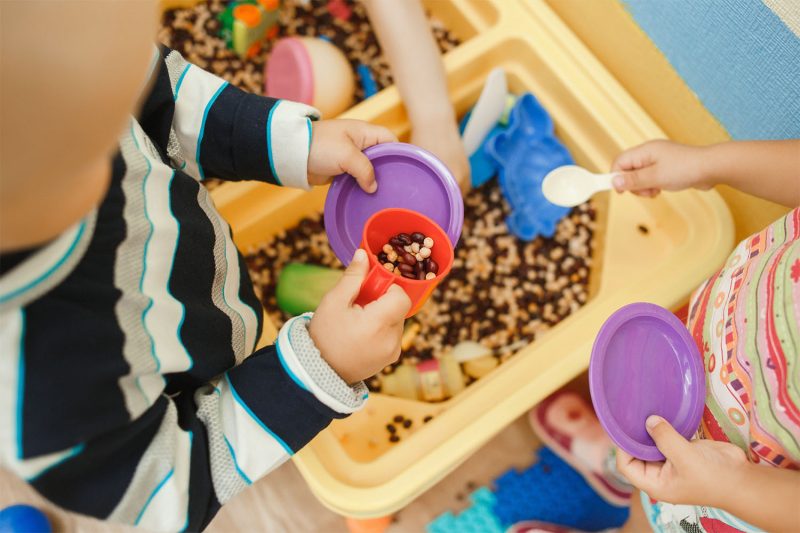
In addition to providing cognitive development skills and encouraging creativity for children, sensory stimulation is a useful tool for emotional regulation skills. By exploring their five senses in a fun way, sensory stimulation activities help children reduce their anxiety, as well as provide comfort, grounding, relaxation, focus, and self-regulation.
Parents can create a sensory bin to use for regular, fun engagement with their child. The bin can also be brought out specifically when the child becomes emotionally dysregulated. Each sense can be represented, but parents should explore which specific senses help their child calm down the best. Do they love watching bright colors float up and down through water? Do they prefer white noise or silence? Does running their hands through a pile of sand help them focus or overstimulate them further when upset? Once parents understand which sense their child prefers, the bin can be tailored to those specific items.
The actual bin can be as large or small as needed. The parent can decide if they want it to always be available for the child or to only be brought out only when the child is having emotional difficulties.
There is an almost endless supply of fidgets, squishy toys, household objects, and other materials you can use. The following is a list to help get started:
Sight
Bubbles
Light-up bath cubes
Lava lamp or liquid motion bubbler
Fidget spinners
Calm Down jar (search the internet for “How to Make a Calm Down Jar” for a multitude of options and a fun craft to do with your child!)
Sound
Noise cancelling headphones
Clicking fidgets
Binaural beats or meditative music
Sound machine
Listening to the sound of their own breathing
Humming
Rain stick
Touch
Bubbles
Rice/sand
Stress balls to squeeze
Calm strips with different textures
Water play
Smooth stone/sensory stones
Bubble wrap to pop
Soft or silky pillow/blanket
Stuffed animal
Fidget spinners
Finger paints
Taste
Gum/mints (alternative flavors: cinnamon or fruity flavors)
Cold drink
Sour candy
Smell
Essential oils/aromatherapy (especially lavender, mint, eucalyptus for relaxation)
Fresh air outside
Food/baking scents
Many of these items engage multiple senses together at once. For example, a bubble bath includes the scent of the actual bubble bath gel, as well as the touch and sound of the bubbles popping and water splashing. Add light up waterproof cubes to the bath for visual fun of colored bubbles.
Occupational Therapy
Further sensory needs can be explored through consultation with an Occupational Therapist. Vestibular and interoceptive activities can help with space and balance, as well as more significant sensory-seeking needs. Examples include:
Crashing into padded mats
Swinging
Chewy necklaces
Weighted vests/blanket
Bumpy seats
(These tools should be used as part of a sensory diet with guidance from trained Occupational Therapy professionals, as they may have time and weight limits)